OCD Self-Help Programme
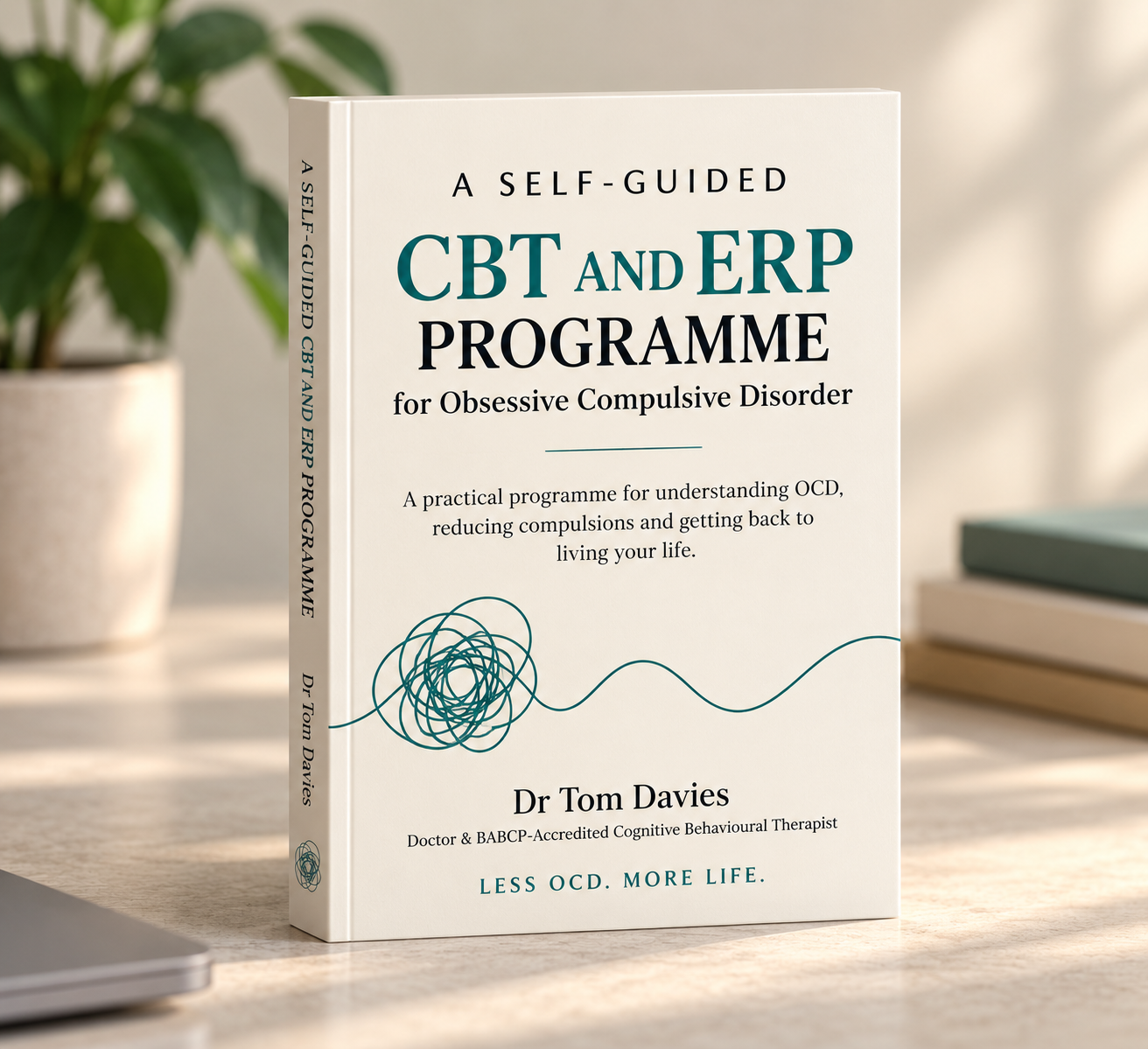
A comprehensive self-guided CBT and ERP programme to help you understand OCD, reduce compulsions and get back to living your life.
£39.99
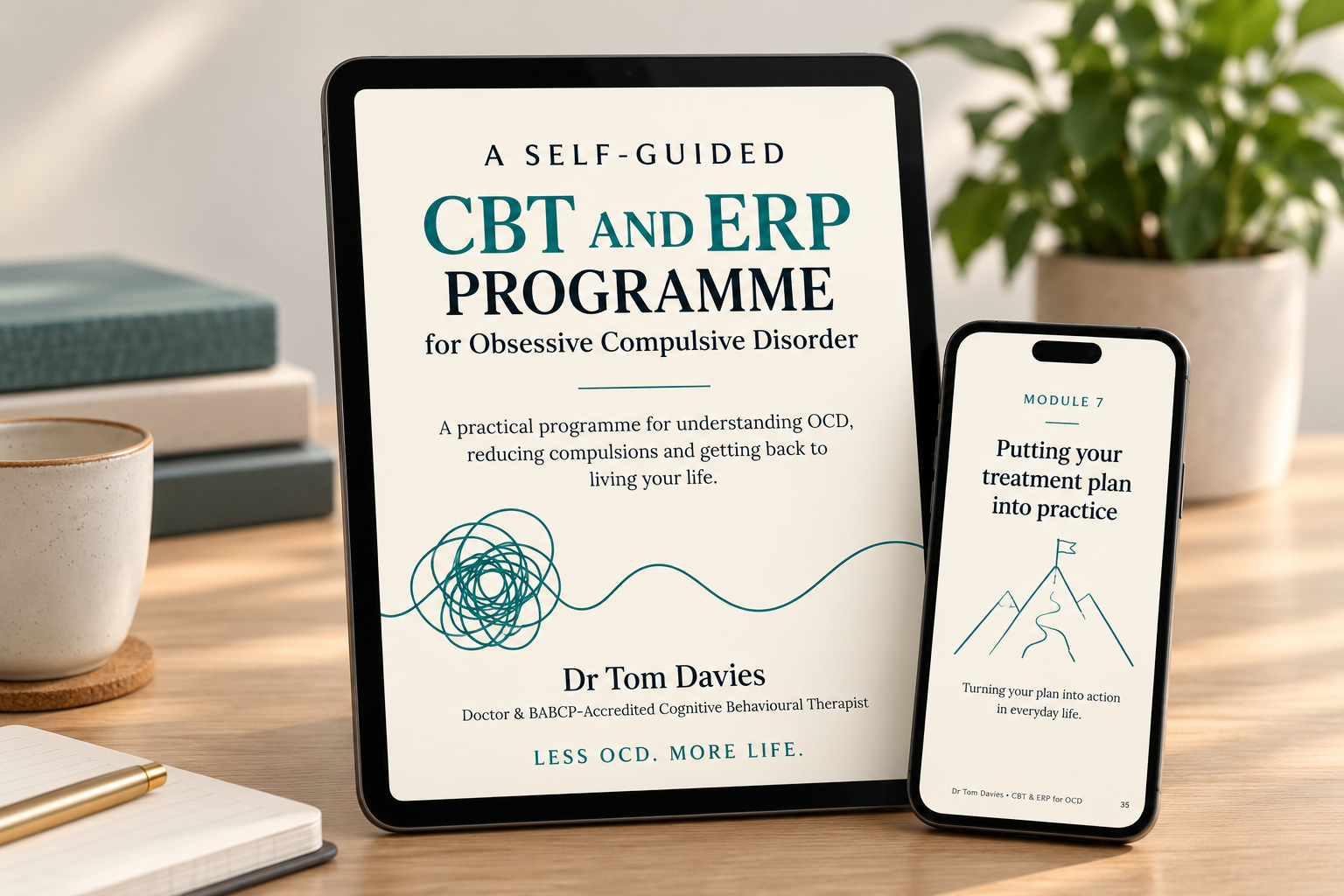
a flexible and affordable way to work on your ocd
OCD affects everybody differently. People also have different circumstances, preferences and financial situations. Not everyone wants, needs or can afford regular one-to-one therapy. For this reason, Tom has created a comprehensive self-guided CBT and ERP programme for OCD. It brings together the same core principles used in evidence-based OCD treatment in a format that you can work through independently, at your own pace and in your own time. You can use the programme entirely by yourself, with occasional professional support, or alongside individual CBT and ERP. The programme itself explains these different ways of using it. If you would like some professional input without committing to regular therapy, Tom also offers 30-minute OCD consultations to help you apply the programme to your own difficulties, troubleshoot areas where you’re stuck or think through your next steps. Alternatively, 50-minute individual CBT and ERP sessions are available if you would like more comprehensive support.
What does the programme consist of?
The programme takes you through 12 structured modules, drawing on the principles of Cognitive Behavioural Therapy (CBT) and Exposure and Response Prevention (ERP) for OCD. You’ll begin by developing a clearer understanding of your own OCD: where it may have come from, the intrusive experiences you have, the compulsions you use in response, and how these responses can unintentionally keep the OCD cycle going. From there, the focus shifts to changing how you respond to OCD. You’ll explore your motivation for recovery, identify what you want to change and build a personalised treatment plan. The programme then guides you through putting that plan into practice in everyday life, gradually reducing compulsions, learning to sit with uncertainty and discomfort, and responding differently when OCD shows up. Later modules tackle some of the trickier parts of recovery, including rumination and mental compulsions, involving family and friends without reinforcing OCD, perfectionism, excessive responsibility and other patterns that can keep you stuck. You’ll also learn how to maintain progress and respond to setbacks without treating every difficult day as a return to square one. The programme includes practical examples and reflection throughout, together with specific guidance for 12 common OCD themes, including contamination, health, harm, relationships, morality and real-event OCD, sexual intrusive thoughts, religious OCD/scrupulosity, existential OCD and body/sensory-focused OCD. It also includes guidance on common treatment stumbling blocks and when additional professional support might be helpful. The aim throughout is simple:
Less OCD. More life.